
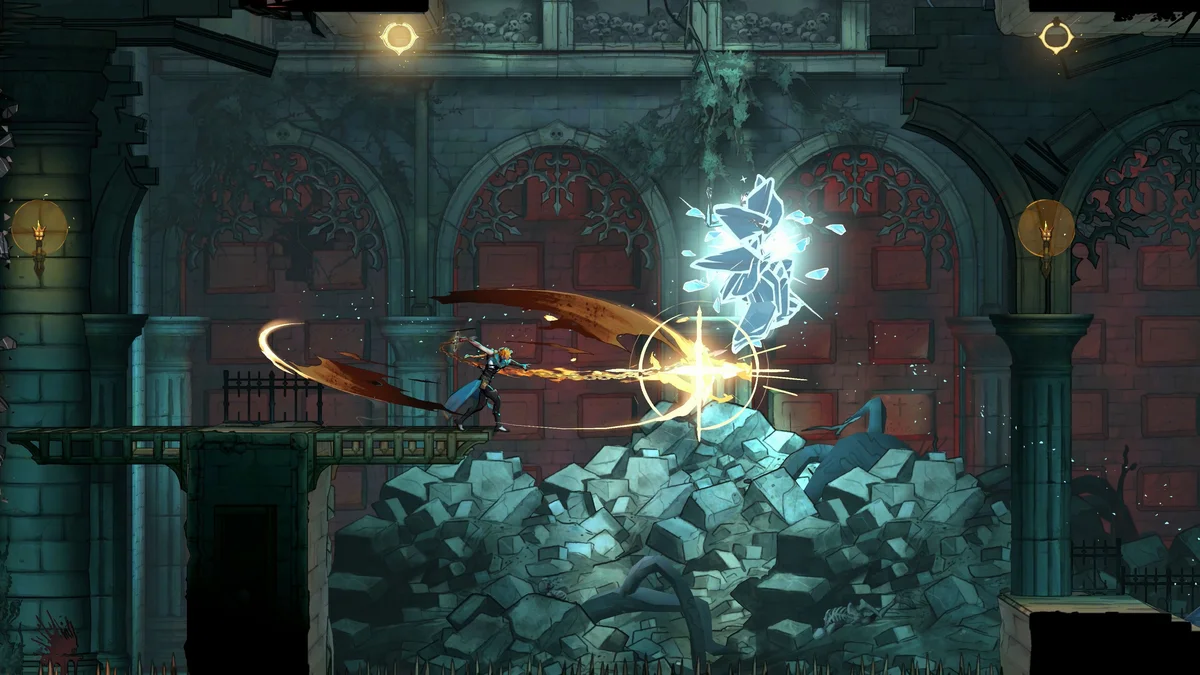
Some franchises disappear. Others survive through the games they inspire. Castlevania clearly belongs to the second category.
Since its debut in 1986, Konami's series has influenced countless adventures built around exploration, platforming and the gradual acquisition of new abilities. Its name even became part of the word Metroidvania, now a widely recognized video game genre.
Yet entirely new two-dimensional Castlevania installments became increasingly rare. Meanwhile, games such as Dead Cells adopted some of the same design principles and adapted them for contemporary audiences.
That history gives the October 15, 2026, release of Castlevania: Belmont's Curse a particular significance. The new game was developed by Konami alongside Evil Empire and Motion Twin, both associated with Dead Cells. The relationship between the original inspiration and its successors has come full circle.
A New Belmont Faces an Old Curse
The story moves to Paris in 1499, twenty-three years after the events of Castlevania III: Dracula's Curse.
Trevor Belmont, an important figure in the franchise's mythology, appears alongside his daughter Rose. She takes the lead as Paris is overwhelmed by supernatural creatures and a conspiracy connected to Dracula's castle.
This approach preserves recognizable elements without simply repeating an existing adventure. Rose carries the weight of her family's reputation, but her journey remains her own.
Castlevania has often relied on generational storytelling. Each new hero inherits a conflict that began long before they were born. The protagonists change and centuries pass, but the creatures of the night return with remarkable persistence.
Paris Becomes the New Gothic Battlefield
The choice of Paris is especially interesting. Gothic environments have always defined Castlevania, but many previous entries centered their worlds on castles, crypts and isolated territories.
Belmont's Curse brings those familiar images into a large medieval city.
Official footage depicts burning streets and monumental architecture towering over a city invaded by monsters. Cathedrals, religious buildings and underground environments give the setting a stylized historical identity.
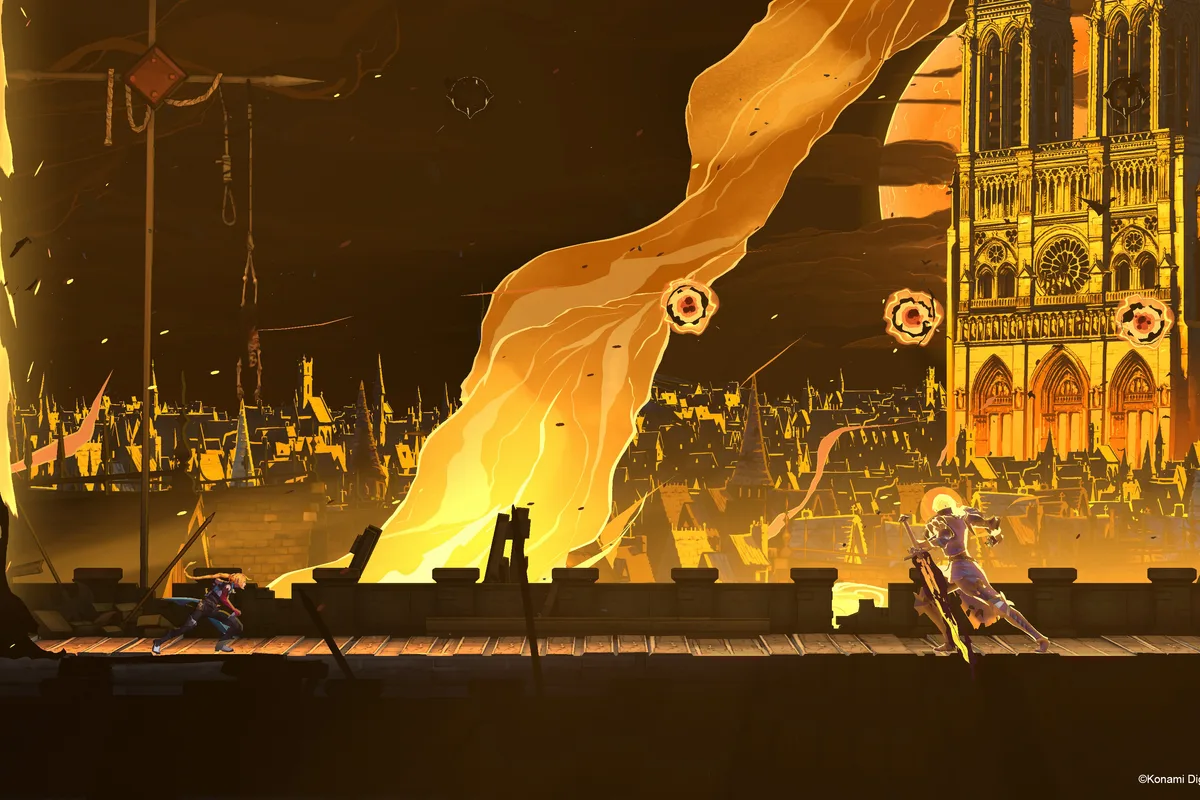
The game is not attempting a historically accurate reconstruction of late fifteenth-century France. It presents a supernatural interpretation in which European architecture becomes the setting for another conflict between vampire hunters and the forces of darkness.
That approach is consistent with Castlevania's long-standing mixture of history, mythology and fantasy.
A Visual Identity That Never Really Went Away
Castlevania's Gothic aesthetic occupies a distinctive place in popular culture. Dark environments, elegant monsters, stained-glass windows and tragic heroes helped create an immediately recognizable identity.
Animated adaptations of the franchise have also kept that imagery familiar to audiences who may never have played its older games.
Belmont's Curse maintains that connection by revisiting a period linked to Trevor Belmont and the events of Castlevania III.
However, that does not make the game a direct adaptation of the animated series. Its primary foundations remain Konami's video game mythology.
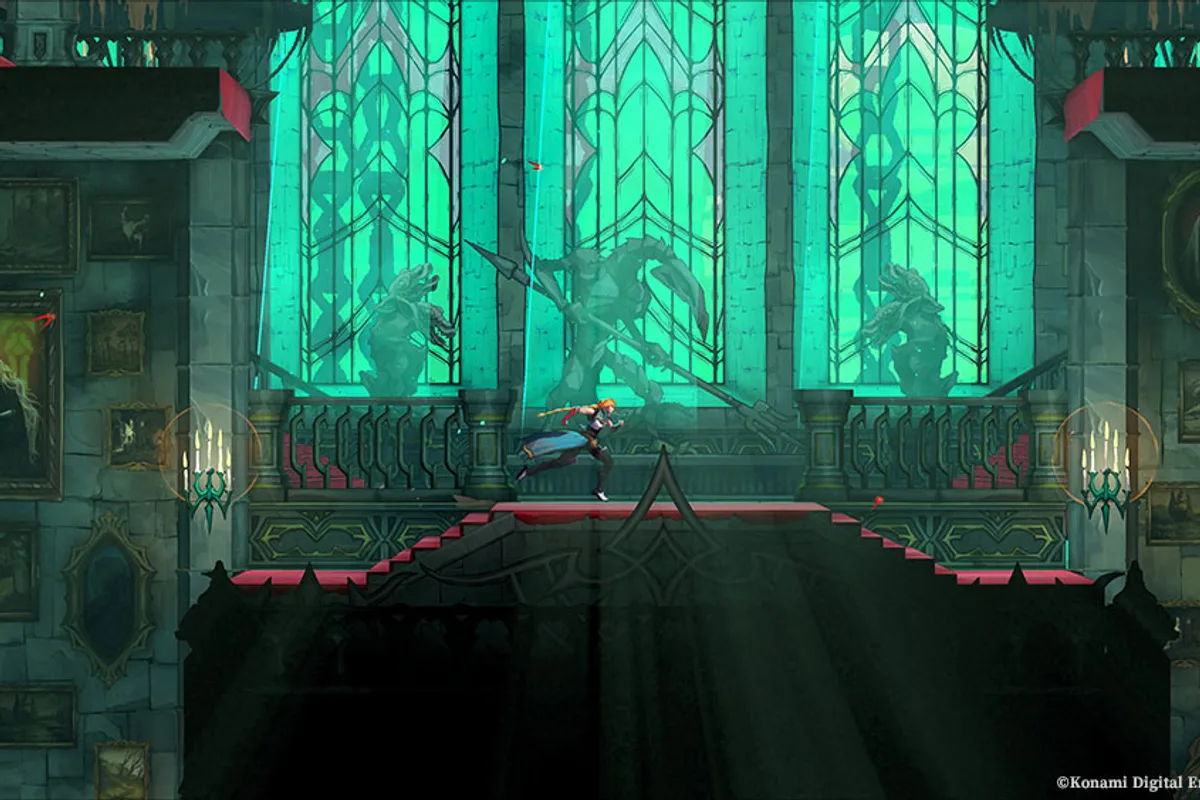
The visual direction combines animated characters, intricate environments and dramatic color contrasts. It modernizes the presentation without removing the features that make the franchise recognizable.
The Successors Help Revive Their Inspiration
The involvement of Evil Empire and Motion Twin adds another layer to the project.
Dead Cells emerged from a generation of independent games built around precise combat, demanding progression and learning through failure. Its popularity helped establish modern expectations for responsive movement and fluid action.
Belmont's Curse brings some of those sensibilities back to a much older franchise.
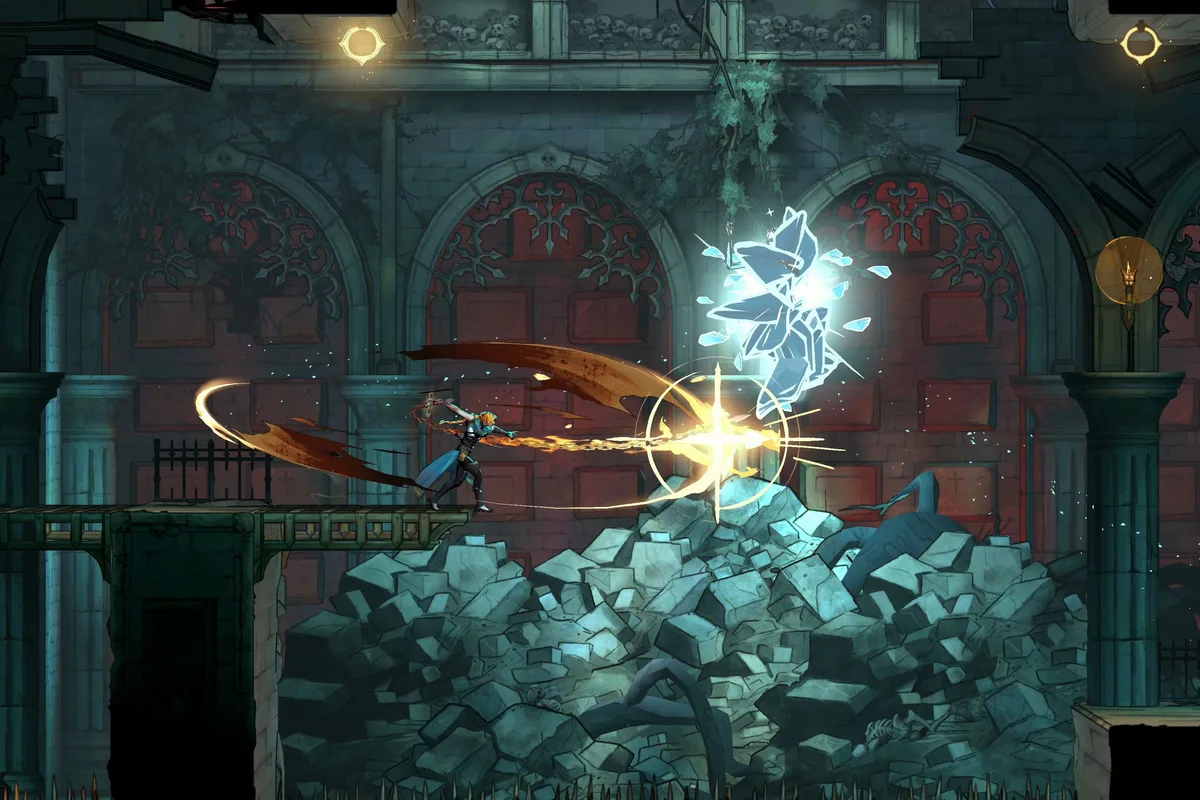
The Vampire Killer whip illustrates that interaction. Historically Castlevania's signature weapon, it now serves as both a combat tool and a major movement mechanic.
The objective is not to erase the series' past, but to reinterpret its familiar design ideas for players accustomed to more recent action games.
Monsters Become Part of the Hero's Arsenal
The Arcana system offers another example of that evolution.
Rather than merely defeating a boss to open a route or complete a challenge, Rose can acquire certain enemy powers as tarot cards.
Mythological figures and supernatural creatures become resources that can transform the protagonist's abilities.
The mechanic belongs to a broader action-RPG tradition in which character progression involves absorbing or mastering powers encountered throughout an adventure.
It also gives the theme of inheritance a practical meaning. Rose receives the legendary whip from her family's tradition, but gradually develops her own fighting style through the creatures she defeats.
An Important Return Without a Guaranteed Revolution
Belmont's Curse does not arrive in a genre that has been standing still.
Modern action-exploration games have introduced increasingly sophisticated level structures, varied combat systems and ambitious artistic approaches.
Returning to that space means Castlevania must now compete with its own successors. Its historical reputation alone cannot guarantee that a new installment will automatically become a defining example of the genre.
Early reviews published around launch have praised the game's presentation and satisfying combat while debating how much it innovates compared with other modern Metroidvanias.
That tension is what makes this release culturally significant. Castlevania is not returning to an empty landscape. It is coming back to a gaming world shaped partly by its own ideas.
Forty years after its debut, the franchise must demonstrate that it can still find something new to say with a whip, a castle and a collection of vampires. Rose Belmont inherits more than her family's curse: she also carries the expectations of generations of players.