
All eight episodes of Carrie are now streaming
Prime Video released the complete first season of Carrie on Wednesday, October 7, 2026. Amazon confirms that all eight episodes are available across more than 240 countries and territories, with audio options including French and German in supported regional listings.
Mike Flanagan serves as showrunner, writer and executive producer. He also directs four episodes, while Kate Siegel, Axelle Carolyn, Kyra Sedgwick and Hiromi Kamata are among the other credited directors.
Stephen King is an executive producer on the Amazon MGM Studios production, an important connection for a project that revisits the writer's first published novel more than half a century after its initial release.
The television format makes this version considerably different from Brian De Palma's celebrated 1976 movie. Instead of condensing the narrative into a theatrical feature, Flanagan has eight episodes to explore high school relationships, family dynamics and the decisions leading toward a devastating confrontation.
More running time is not automatically a creative advantage. It allows for greater character development but also requires sustained tension around a story whose basic trajectory is already familiar to many viewers.
Carrie enters a world where humiliation never really disappears
Summer H. Howell plays Carrie White, a sheltered teenager raised largely apart from other children under the intense supervision of her mother Margaret.
After her father's sudden death, Carrie enters public high school and discovers a social environment whose rules she has never fully learned.
Her attempts to adapt are quickly undermined by cruelty from other students. A bullying scandal spreads through social media, turning her personal humiliation into a public spectacle that affects the wider school community.
At the same time, Carrie begins developing mysterious telekinetic abilities. The powers emerge alongside the physical and emotional upheavals of adolescence, connecting a supernatural threat to experiences of fear, shame and isolation.
Those elements remain consistent with the central themes of King's novel. What changes most significantly is the technological environment in which the mistreatment occurs.
Cruel behavior no longer has to remain within school corridors or conversations between classmates. It can be recorded, distributed and repeatedly encountered by the victim, potentially reaching people who had no involvement in the initial incident.
The distinction is important. Social media did not create bullying, but it has changed the scale and persistence of public humiliation.
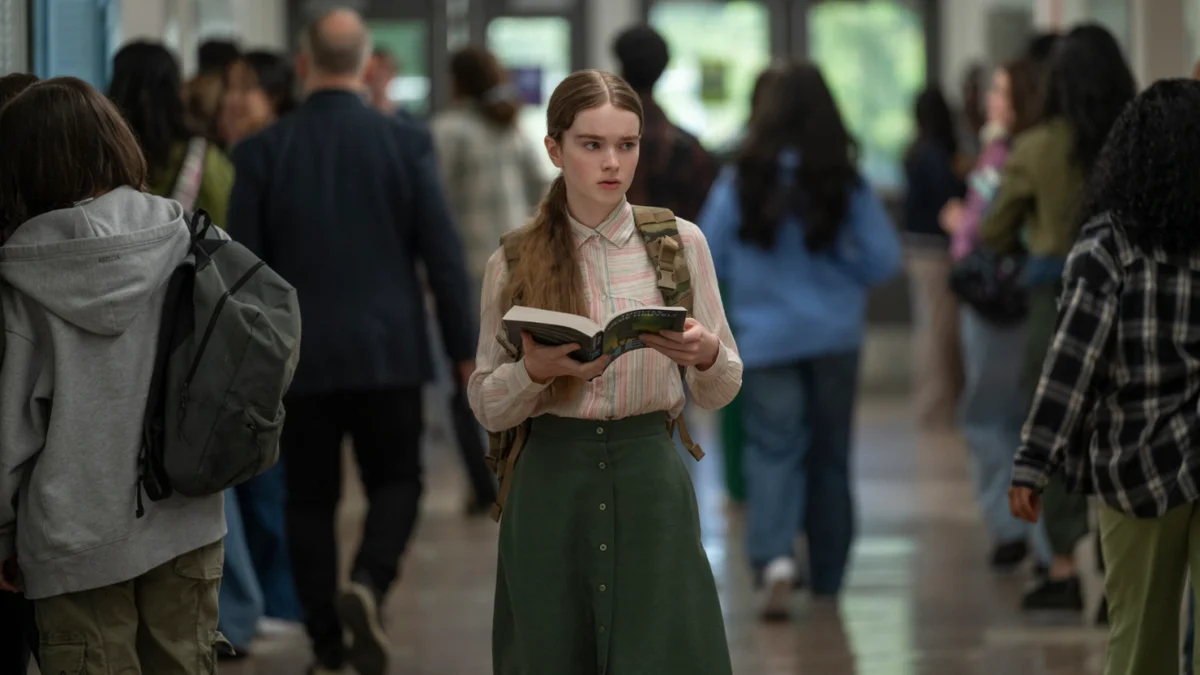
One of Amazon's promotional images shows Carrie standing alone in a busy school corridor, surrounded by students who appear to occupy a different social world. The photograph communicates her isolation without requiring any supernatural imagery.
Mike Flanagan initially resisted remaking Carrie
Returning to such a recognizable story raises an obvious question: why adapt Carrie again?
Flanagan explained in an interview with Men's Health that he was initially reluctant to revisit the material. He regarded De Palma's 1976 film as a particularly accomplished adaptation and did not immediately see a reason to reproduce it.
His perspective changed as he considered the social environment facing his son's generation. The experiences of contemporary teenagers, the role of public exposure and the changing ways cruelty can spread suggested a different approach to King's material.
The resulting series is therefore intended as more than a nostalgic recreation. It retains the central premise while modifying relationships and developing characters whose roles were more limited in previous adaptations.
Flanagan has an established connection to King's writing. He previously directed Gerald's Game and Doctor Sleep, while building his television reputation through The Haunting of Hill House, Midnight Mass and The Fall of the House of Usher.
His work frequently explores family trauma, guilt and the lasting consequences of violence. Carrie offers a natural setting for those interests, although the new series should still be considered on its own creative terms.
Margaret White becomes a more complicated kind of threat
Samantha Sloyan portrays Margaret White, Carrie's mother. Earlier adaptations emphasized the character's frightening religious extremism, particularly through Piper Laurie's memorable performance in De Palma's film.
The new series preserves Margaret's controlling behavior but attempts to present a more emotionally complex figure.
Promotional interviews describe her as a woman capable of loving her daughter while also subjecting her to profoundly damaging restrictions and behavior.
The creative intention is not necessarily to excuse Margaret's actions. Instead, the series explores how genuine affection, fear and destructive conduct can coexist within a family relationship.
That distinction changes the dramatic tension. A purely monstrous parent is easy for an audience to recognize as a threat. A parent whose love and harmful behavior are intertwined creates a more difficult emotional situation for the child.
Flanagan has said that King supported the adaptation's more empathetic treatment of its characters. That is a statement about the creators' intentions and collaboration, not a guarantee that every viewer will find the changes effective.
Some critical responses have questioned whether the more sympathetic portrayal weakens the terror associated with Margaret in earlier versions.
The disagreement reflects a genuine creative choice, rather than a superficial change designed merely to make the story appear contemporary.
Bullying becomes a question of collective responsibility
The expanded format also gives additional attention to Carrie's classmates.
Alison Thornton plays Chris Hargensen, while Siena Agudong portrays Sue Snell. Joel Oulette appears as Tommy Ross, Josie Totah plays Tina and Arthur Conti portrays Billy Nolan.
Amber Midthunder joins the cast as Rita Desjardin, an adult attempting to navigate an increasingly hostile school environment.
These characters are not present only to trigger events that fans of the novel already remember. The series can explore their behavior before the most consequential moments and examine the choices made by those who participate in humiliation, encourage it or fail to intervene.
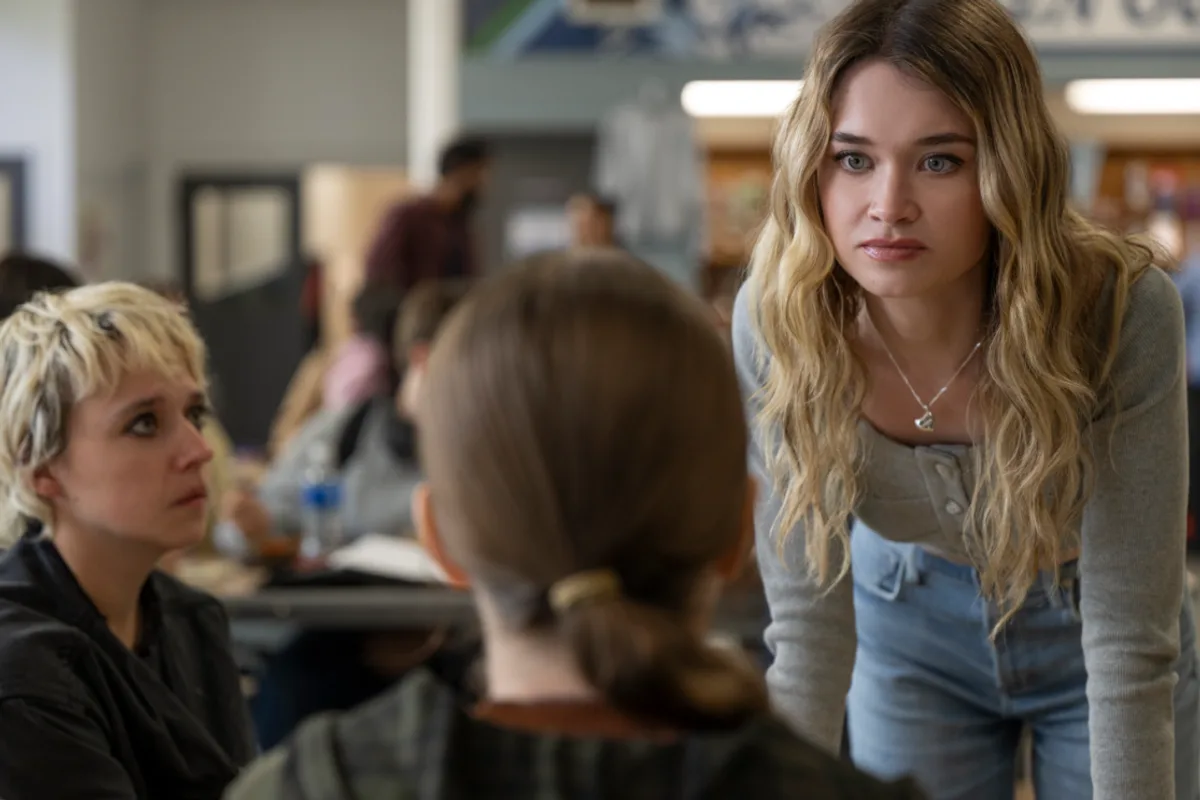
In interviews with People, Flanagan and members of the cast discussed moving beyond a simple division between victims and villains.
The adaptation gives some traditionally antagonistic characters more recognizable emotional motivations without necessarily removing their responsibility.
Understanding why someone behaves cruelly is not equivalent to declaring that behavior acceptable.
The social media element broadens this question. A humiliating event can be prolonged by viewers who were never physically present. Participation may involve recording, sharing, commenting or choosing to remain indifferent.
The show uses these different forms of involvement to examine the behavior of the wider community.
Carrie remains central to the tragedy, but the events surrounding her cannot be reduced entirely to a conflict between one girl and a handful of cruel classmates.
Sue Snell and the supporting characters gain more room
The longer narrative particularly benefits characters such as Sue Snell.
In King's original story, Sue occupies a distinctive position because she is connected to the mistreatment Carrie experiences while also possessing the ability to reconsider her actions.
With Agudong in the role, the series can spend more time exploring the discomfort of challenging the behavior of a group to which someone belongs.
Tommy Ross and other students also contribute to a broader picture of high school life. Their relationships and decisions help establish the social conditions surrounding Carrie rather than functioning solely as plot devices.
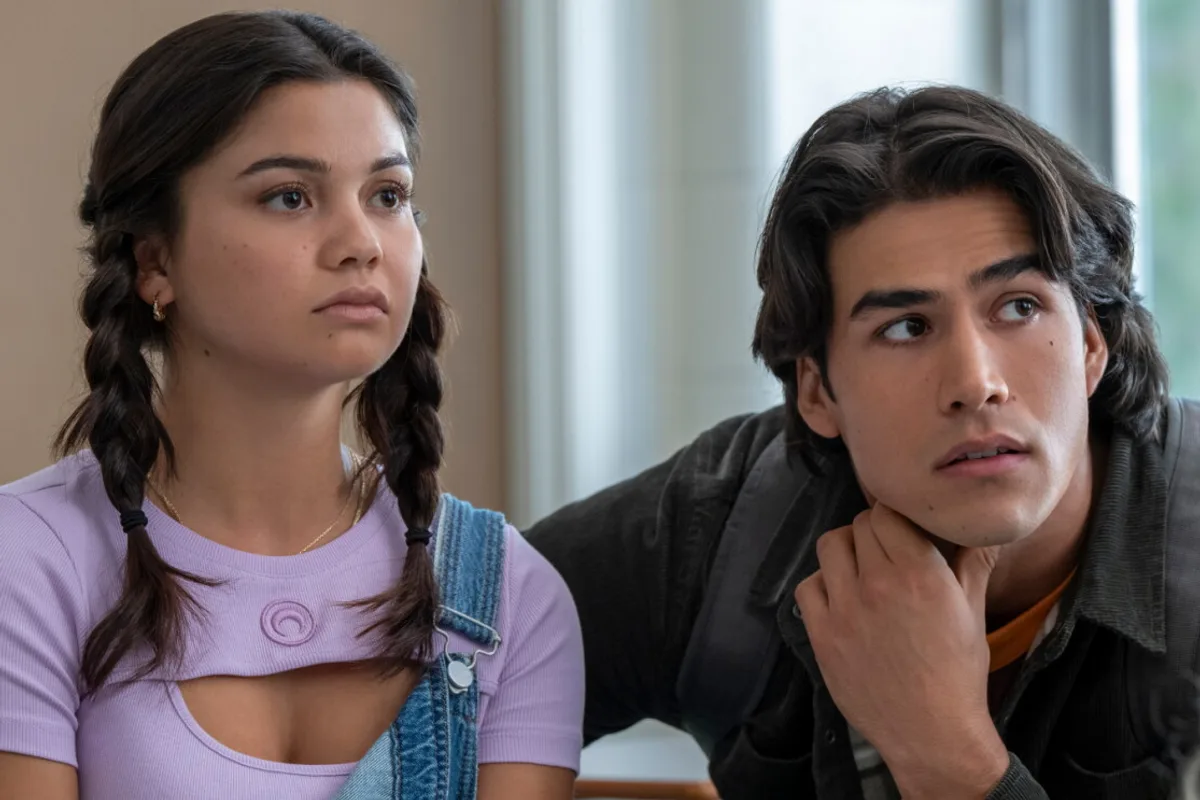
The adaptation additionally introduces Emaline, played by Thalia Dudek. Her presence expands the mythology beyond the novel's best-known characters, although discussing her role in detail would reveal developments from the later episodes.
The introduction of new material suggests that Flanagan is not simply extending a relatively short novel to occupy a longer running time. He is also interested in developing aspects of the fictional world that previous adaptations had little opportunity to investigate.
That ambition should not be confused with an official announcement of further seasons. As of October 16, 2026, a second season has not been formally confirmed by the sources reviewed for this article.
Fifty years after De Palma, Carrie belongs to several generations
The series arrives exactly fifty years after Brian De Palma's 1976 adaptation, a landmark of horror cinema featuring Sissy Spacek and Piper Laurie.
For some viewers, that film remains the definitive visual interpretation of Carrie White. Others know the character primarily through King's book or subsequent adaptations.
The new production therefore has to work for audiences approaching the material with very different expectations.
Longtime fans will inevitably compare its familiar situations with earlier versions, while newcomers may experience the story without those associations.
Eight episodes offer a means of distinguishing the series. Television can devote more time to the rhythms of school life, Carrie's relationship with her mother and the behavior of secondary characters.
But the original novel is built around a powerful escalation toward a major event. Extending that structure requires additional material that maintains tension rather than simply delaying the inevitable.
The most useful question is therefore not whether every scene resembles the book or the 1976 movie. It is whether this version uses the possibilities of television to develop something meaningful beyond the earlier adaptations.
Prime Video positions Carrie as a major October horror release
The October 7 release is well timed for the Halloween season, when streaming platforms traditionally emphasize horror programming.
Prime Video has several recognizable advantages with this production: a celebrated literary property, a filmmaker associated with acclaimed horror series and a cast combining emerging performers with established names.
Howell was selected following an extensive casting process. According to Amazon, more than 1,000 performers were considered for the central role.
That search reflects the importance of finding a new performer for a character strongly associated with previous actresses, particularly Spacek.
Releasing all eight episodes simultaneously encourages audiences to watch the complete story during the Halloween period and makes discussion of the adaptation's creative changes possible immediately.
Amazon confirms distribution across more than 240 countries and territories, potentially bringing this version to viewers whose previous experience of Carrie may be limited or nonexistent.
International availability, however, should not be confused with proven global success. The official sources reviewed do not establish a comprehensive worldwide audience total for the new series.
The real horror may still be ordinary cruelty
Carrie's telekinetic abilities remain the most recognizable supernatural element of the story. Yet those powers are not the original source of her suffering.
Her distress grows from family isolation, social exclusion and the behavior of people around her.
By placing viral humiliation within that familiar structure, Flanagan makes the consequences of everyday cruelty feel particularly contemporary.
The increased attention given to Margaret, Chris, Sue and other supporting characters reinforces the idea that Carrie's tragedy cannot be understood through one individual's actions alone.
Flanagan's stated ambition is to bring empathy back into a story frequently remembered for its most spectacular horror imagery.
That approach may not convince every admirer of King's novel or De Palma's film. The series is now available for viewers to assess its creative decisions themselves.
Fifty years after the film that made Carrie a horror icon, the central question remains deeply uncomfortable: how many ordinary people can contribute to a catastrophe while each believes that responsibility belongs to someone else?