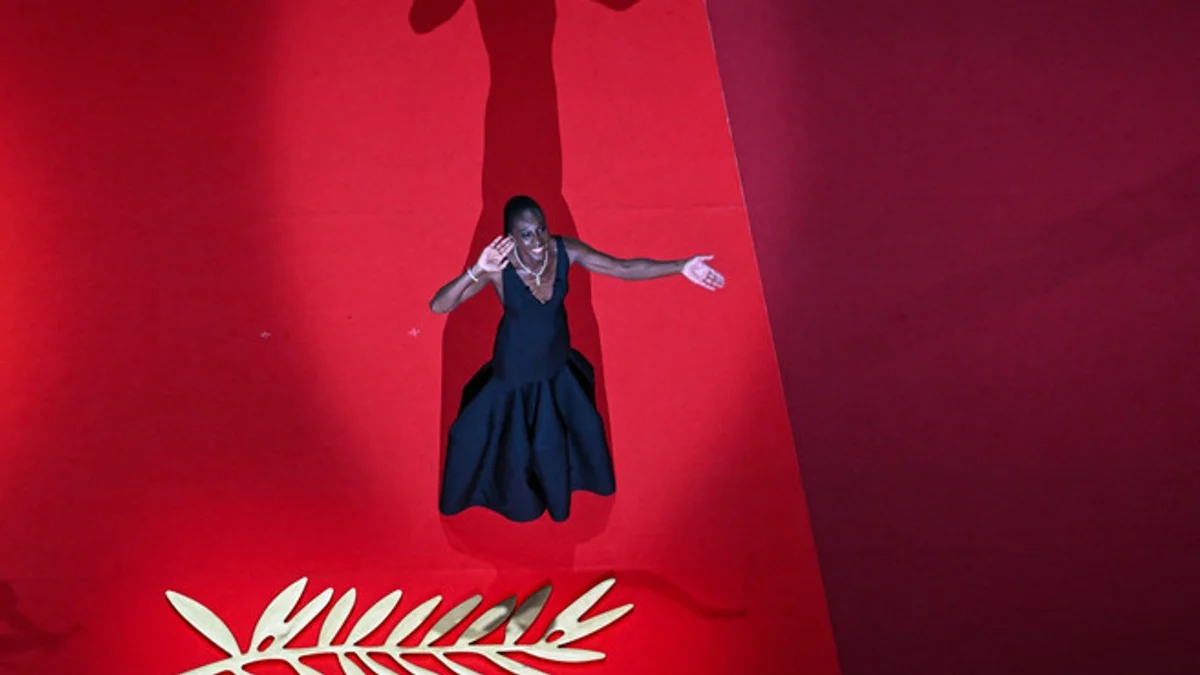
Haïdara hosted the opening of the 79th Festival de Cannes at the Grand Théâtre Lumière, working from a ceremony text co-written with filmmaker and screenwriter Thomas Bidegain.
The actress had described her intended approach beforehand in uncomplicated terms: sincerity, passion and joy. The final speech kept that warmth while giving the opening a cultural argument rather than merely an introduction to the evening's guests.
Godard provided the shortest version
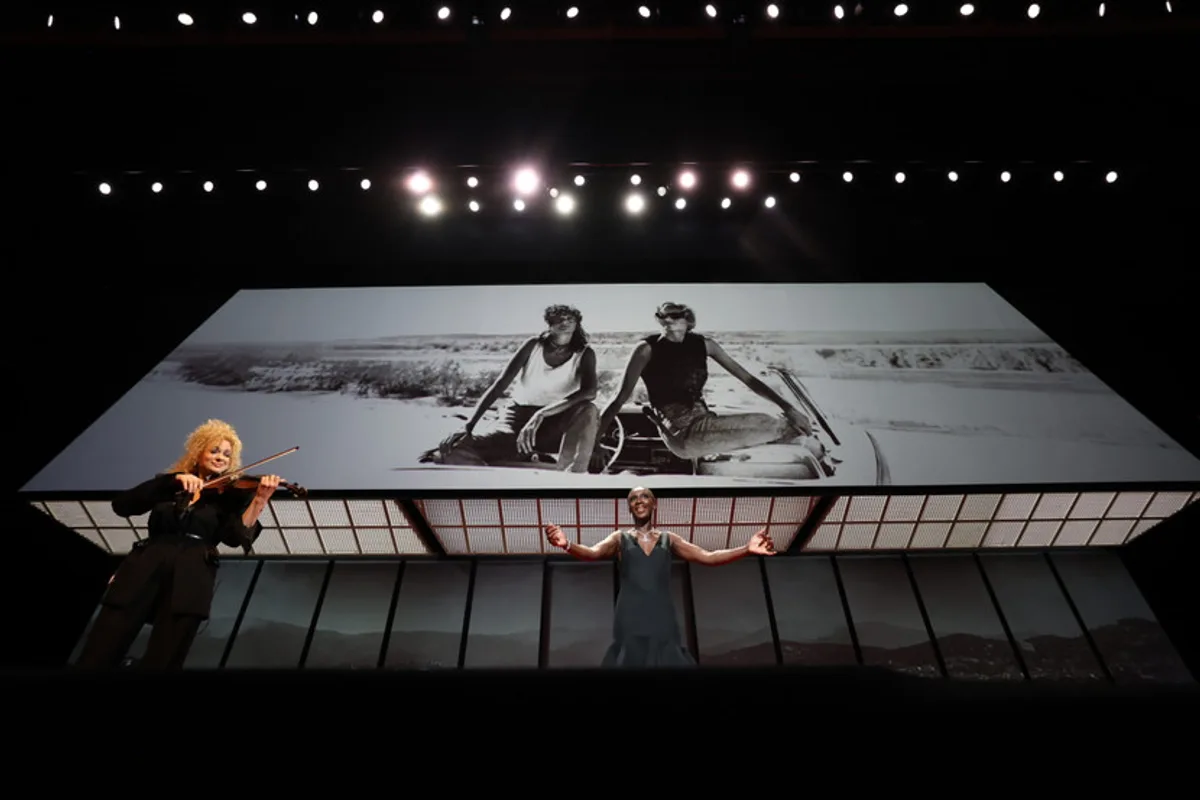
With violinist Miri Ben-Ari joining her onstage, Haïdara quoted Jean-Luc Godard: “We don't make a film to be cautious.”
She then widened that thought toward filmmakers willing to record what audiences may prefer not to confront. Her emphasis was not on one named political event. It was on whose lives a movie decides are worth seeing: famous or anonymous, powerful or almost invisible.
Reuters characterized the wider opening night as subdued compared with some recent editions, with fewer Hollywood celebrities and relatively little explicit political commentary. Haïdara's language complicates that description without really contradicting it. Resistance was present. It arrived through an argument about attention and representation rather than a sequence of topical declarations.
Comedy was not treated as an escape hatch
One of the less predictable turns in the speech was Haïdara's decision to include filmmakers who make people laugh. She framed laughter itself as an underestimated form of courage.
That idea has a personal route into her career. C'est la vie!, directed by Éric Toledano and Olivier Nakache, brought Haïdara to a much wider audience in 2017 and earned her a César nomination. In Cannes' pre-festival profile, she remembered working with Jean-Pierre Bacri on that movie as a moment when she rediscovered the force of comedy after being drawn heavily toward tragedy.
The opening speech did not ask those traditions to compete. A movie can stare directly at something painful and another can release pressure through laughter. Cannes was beginning with both inside the same definition of courage.
Haïdara was not standing outside the festival program
Her job in 2026 went beyond hosting. Haïdara also appears in Agnès Jaoui's L'Objet du délit, which screened Out of Competition.
Before the festival she described her character, Cora, as someone who pushes at closed doors to force discussion. Jaoui's ensemble film deals with generations struggling to speak to one another, giving Haïdara an unusually direct bridge between the ideas she introduced from the stage and one of the films she was there to represent.
Her comfort with a live audience also predates her screen career. Haïdara trained through the Académie de théâtre de Lorient and worked extensively in public theater, including Avignon. She calls the stage her favorite playground, although she still admits it frightens her.
Then came the people who had to judge the movies
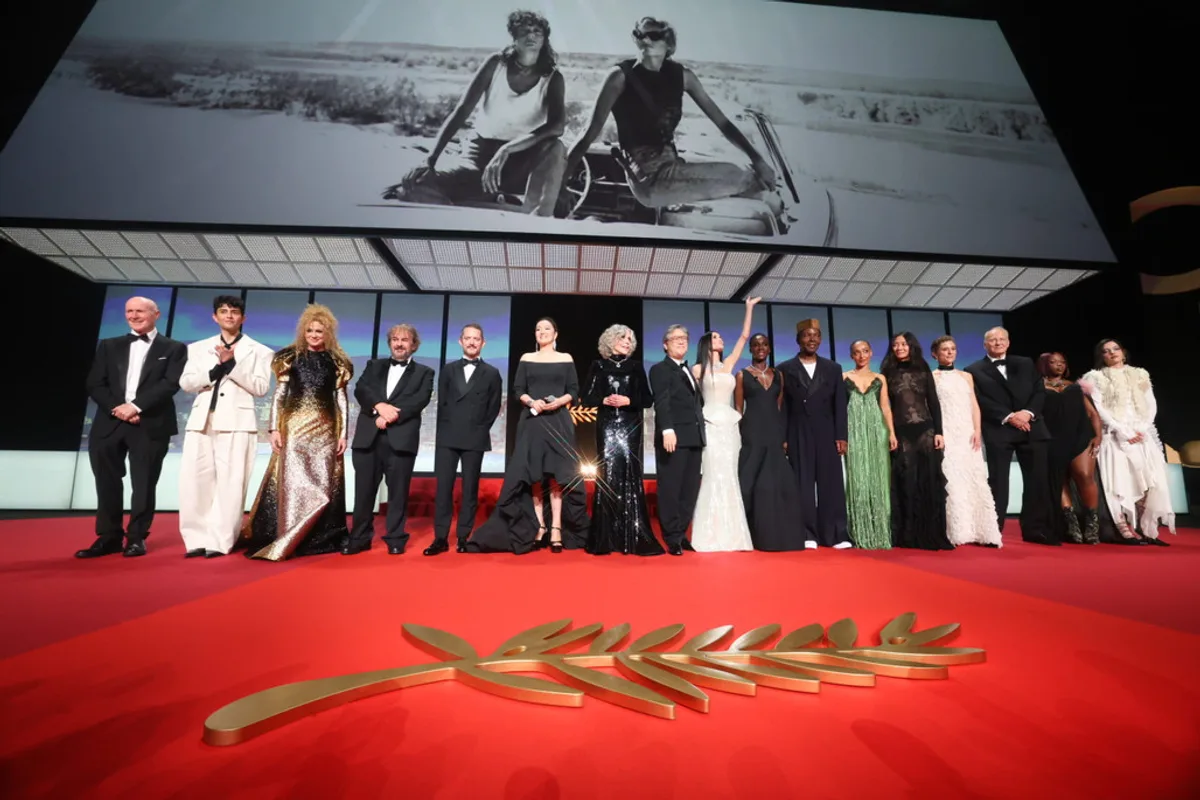
The speech led directly into the introduction of the feature-film jury chaired by Park Chan-wook. Demi Moore, Ruth Negga, Chloé Zhao, Laura Wandel, Diego Céspedes, Isaach De Bankolé, Paul Laverty and Stellan Skarsgård joined him.
Twenty-two Competition titles were waiting for that jury. Eleven days later, Cristian Mungiu's Fjord would receive the Palme d'Or.
The ceremony returned to creative freedom at the end
Much happened between Haïdara's entrance and the official declaration that Cannes was open. Elijah Wood presented Peter Jackson with an Honorary Palme d'Or. Theodora and Oklou performed Get Back in a nod to Jackson's Beatles documentary work.
Gong Li and Jane Fonda then closed the ceremony by invoking boldness, freedom and the act of creation. Their language gave the evening a second version of the idea Haïdara had introduced earlier: cinema remains interesting partly because somebody has to decide to look, speak or create before there is any guarantee that doing so will be comfortable.
The 79th Festival de Cannes was officially open on May 12.